
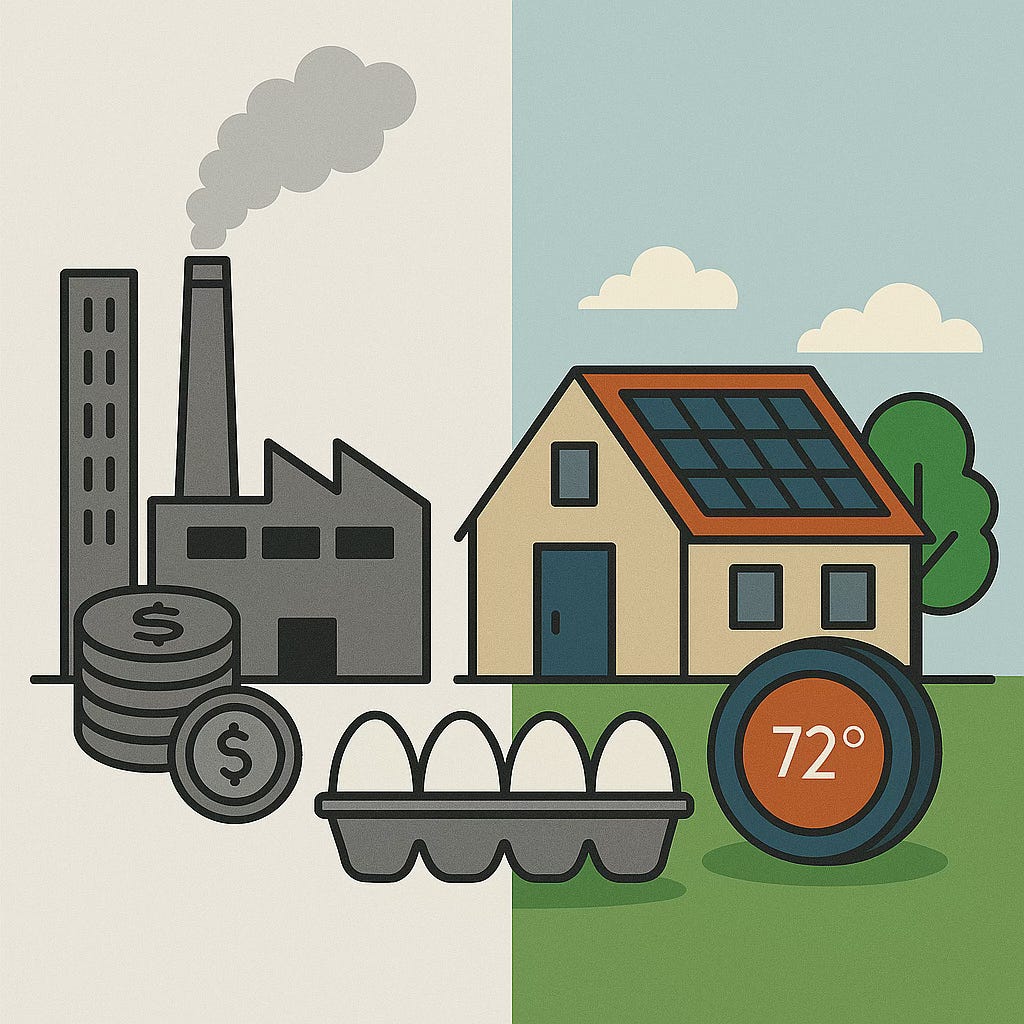
As tariffs and trade wars tear across the economy, uncertainty tightens its grip.
Even oil and gas, which are currently exempt from import tariffs, aren’t immune, with commodity indices down 30 percent year over year. Unstable and short-sighted policy signals have pushed prices so low that there is no financing for new projects. The recent Executive Order to prop up uneconomic coal plants is less a strategy and more a last-ditch attempt to delay the inevitable. Despite calls for energy abundance amid an “energy emergency,” even fossil-based energy isn’t equipped to withstand uncertainty at this magnitude.
We don’t have to look far in the rearview mirror to recall how the world shut down during COVID five years ago, and that there were winners in the market. On the whole, renewable energy as an industry has consistently grown through uncertainty. It has the appetite and the skill set to withstand systemic shocks. Few other industries can say the same. Just look at the performance of distributed energy resources (DERs) and the broader renewable sector over the last 20+ years. High uncertainty is the rule, not the exception, and yet the market has done well because the demand was there and the value was tangible despite large swings in government incentive levels.
DERs, in particular, shine under pressure. When uncertainty rattles the economy, people shift their priorities. They’ll trade a new pair of jeans or a fancy coffee maker for a smart thermostat because it offers real control. It’s worth remembering, DERs deliver first for the user, and second for the grid.
People will continue looking for ways to control what they can, like their utility bills, and gain more independence from external forces. At CERAWeek, industry leaders called out the obvious—reliable power, 24/7, is a must. And no one understands that better than those adopting DERs, because they’ve experienced firsthand the failures of traditional utility service. Consumers want to know how much a dozen eggs costs and how much it will cost to power their lives. DERs help deliver that kind of reliability and clarity.
During economic downturns, spending becomes more intentional, and new solutions tend to emerge. History shows us that people are willing to invest in tools that give them control over energy usage, costs, and resilience. The current trade war will hit many sectors hard, but DERs are better positioned than many. Yes, the market will feel the impact, as we have seen before when major state or federal policies shift, and growth may slow. Some projects tied to federal grants may stall or fail. And sure, the Inflation Reduction Act (IRA) has helped, but DERs were proving their value long before it.
Some investment advisors may recommend utilities as a safe commodity play in uncertain times. As utilities continue to raise rates, 5 to 10 percent or more year over year, consumers are left paying more for less control. DERs stand apart as a hedge against rising costs, and a proactive investment in stability, self-reliance, and long-term savings. At a moment like this, DERs offer something traditional utilities simply can’t, the ability for people to take charge of something that’s otherwise out of their hands.
In a world full of unknowns, DERs will help weather the storm and enable us to emerge stronger.